Honda ECU Repair
If you’re experiencing Honda ECU issues and you’re looking for a stress-free and long-lasting solution, you’re in the right place. We test and rebuild a huge range of Honda ECUs in just 2-3 working days with unlimited-mile warranty included!
Find a selection of Honda ECUs we commonly rebuild below, or browse our product catalogue for our entire range:
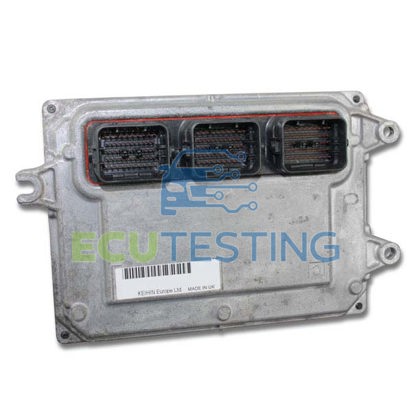
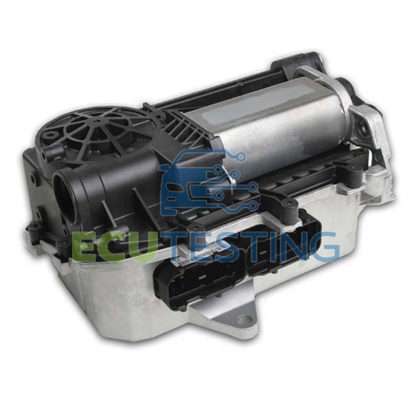
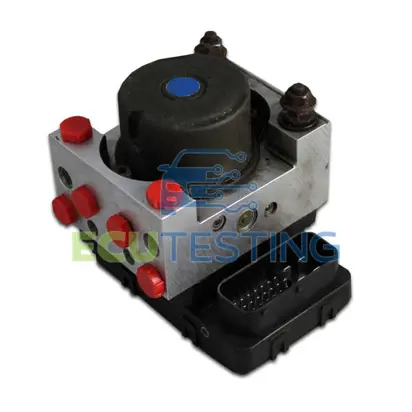
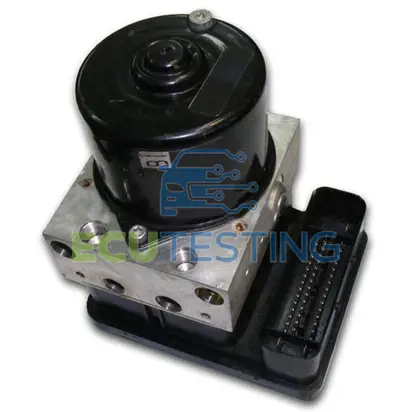

Can’t find your Honda ECU listed above? Don’t worry this is just a small selection of Honda control modules we rebuild – our full Honda range can be found here.
Which Honda ECUs do we rebuild?
We test and rebuild a huge range of Honda ECUs, however, some we see more often than others.
It’s common for Honda vehicles to experience issues with a range of different ECUs. In addition to clutch actuators, we often rebuild ABS units and instrument clusters for the Honda Civic. It’s also common for Honda Jazz owners to suffer failure of the engine ECU or ABS module.
How do I know my Honda ECU is faulty?
When a Honda ECU needs to be repaired or rebuilt, you’ll no doubt experience a range of performance issues and/or warning lights. You might even be left with concerning fault codes too – ECUs often refuse to communicate with any other module when they’ve failed internally.
Don’t worry though, we can resolve this with our test-and-rebuild service, which is much more effective than a Honda ECU repair.
Can a damaged Honda ECU be repaired?
As most Honda ECUs we see have malfunctioned due to internal component failures, this can usually be resolved by a meticulous rebuild of the control module.
Thankfully, our Honda ECU testing service can help you out with this. Using our state-of-the-art testing rigs, we’ll determine whether your defective unit can be rebuilt or not. We’ll always confirm with you before rebuilding your module, and if you decide to go ahead, we’ll even waive the testing fee!
How much does a Honda ECU repair cost?
The cost to repair your Honda ECU varies based on the type of control module and the vehicle it has come from.
Highly complex ECUs responsible for multiple vehicle functions often consist of more internal components than more basic modules, therefore increasing the cost to repair the Honda ECU.
For example, the sixth-generation Honda Civic was fitted with the bulky Bosch 5.3 ABS module, whereas ninth-and-tenth-generation Civics found themselves with the more compact ATE MK100 unit. This ABS update brought with it advanced features like integrated ESC sensors and extra processing power, despite being smaller and lighter. Therefore, a repair of the MK100 Honda ABS ECU typically costs more due to its complex nature.
It's also worth taking into account the type of Honda ECU repair you opt for. Sourcing a brand-new replacement unit undoubtedly comes at a premium. Whereas, a rebuild or repair of your Honda ECU is much less costly.
What’s the difference between a Honda ECU repair and a rebuild?
A Honda ECU repair attempts to patch up the unit’s internal failings by switching out a few faulty components. However, a Honda ECU rebuild completely revamps your unit internally to eliminate the fault at its root and provide a longer-lasting solution than a Honda ECU repair.
If you’re considering replacing your faulty Honda ECU with brand new, do so with caution. Unless the original malfunction has been removed at factory-level, replacement control modules remain susceptible to the original fault you’ve just encountered. Worse still, they’re typically only covered by short-term warranty.
Our Honda ECU Service
Our test-and-rebuild process takes just 2-3 working days and we’ll cover you with lifetime warranty for further peace of mind – unlike a lot of Honda ECU repairs.
We’ll test your Honda ECU before and after the rebuild process too. We have specialist rigs for this which are able to simulate real-world driving conditions. This ensures your rebuilt control module is performing optimally again and is ready to return to your vehicle.
To begin your comprehensive Honda ECU rebuild, submit our quick-and-easy test form today.